Musical Translation
Visual structures become tonal or harmonic systems. Map image data to musical scales, generate harmonic textures, and create ambient compositions from visual patterns.
Try an image, adjust the settings and download your sound. Uploaded previews stay in this browser; library, generated and gallery sources use public links. Guest experiments are not saved. Sign in for saved studies, collections and publishing.
Each translation interprets a 256 × 256 image sample over 8 seconds. Download your sound before leaving.
How this mapping works
Image structure v1 analyzes a 256 × 256 sample. The positions of bright regions select scale notes, repeated edges create subdivisions, empty areas become rests, and detail shortens and brightens attacks. Rhythm Density sets scan steps and repetition; Texture Weight sets note length. MIDI preserves the same note timing, pitch and velocity, but not the audio timbre.
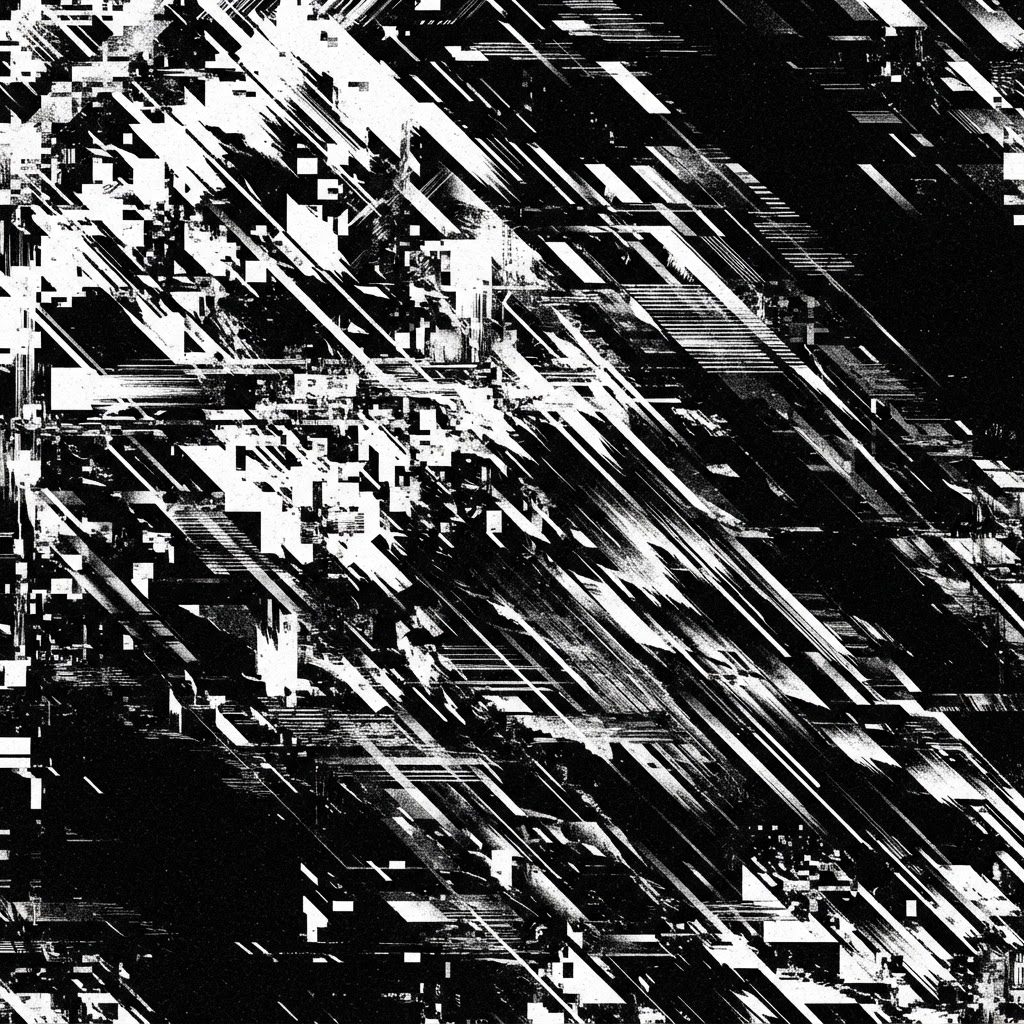
Mapping inspector
Inspect the sampled image at the playback position. Drag below to seek and inspect another moment.
Column 1 / 256 · time 0.000 s · brightness 35.0%
Event 1 / 35: MIDI 74, 587.3 Hz, velocity 65, length 0.042 s.
Structure mapping: bright-region positions, edge density, direction and spacing shape register, articulation and texture. Musical silence follows empty regions. Image-to-sound translation does not preserve all visual information.
Sound character (advanced)
Adds brighter, more complex tones.
Duration stretches the image scan and note spacing. Use Audio finishing for channel placement, output gain and loop edge fades.
Higher values raise the pitch range.
Higher values make the sound louder.
Higher values strengthen the added upper tone.
Higher values add more notes in the same duration.
Higher values lengthen each note.
Audio finishing
Edge fading brings both ends to silence without changing duration. It softens the join but may create a rhythmic dip. MIDI and note diagrams describe the original sequence before audio finishing.
Mono · 8.0 s
M peak -13.6 dBFS · RMS -31.0 dBFS
Boundary step 0.00e+0
Waveform and spectrogram show the mono fold-down. Meters measure the rendered channels.
Export
WAV: native 48 kHz / 24-bit, matching playback. PNG shows the mono fold-down waveform. Left/right WAVs split the stereo channels. JSON records the mapping and source fingerprint.